
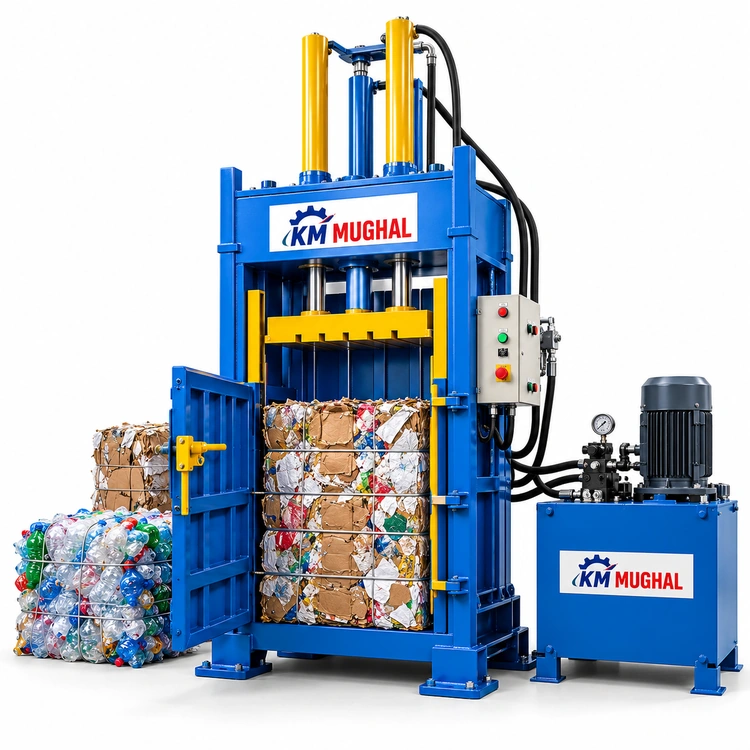
Hydraulic Baling Machine – High-Pressure Material Compaction for Industrial Processing
The KM Mughal Hydraulic Baling Machine (KM-HBM Series) provides power, structural integrity, and high-efficiency fluid power systems to resolve large-scale waste and raw material storage challenges. Designed to deliver consistent, high-pressure compression across a wide range of organic, metallic, and synthetic materials, it compresses bulky loose goods into tightly bound, uniform blocks.
Storing and transporting uncompressed materials like loose paper, plastic sheets, raw cotton, or light scrap consumes massive floor area and results in costly under-utilized freight shipments. The KM Mughal Hydraulic Baling Machine eliminates these operational inefficiencies by maximizing volume reduction, lowering labor overhead, and facilitating seamless handling.
Key Features & Benefits
| Key Feature | Benefit |
| High-Pressure Hydraulic Power | Delivers massive downward or horizontal compression force to handle dense and springy materials. |
| Maximum Volume Reduction | Compacts bulk materials up to 80–90%, dramatically freeing up factory floor and warehouse space. |
| Reinforced Chamber Liners | Engineered with wear-resistant steel to withstand continuous abrasive loads and long operating hours. |
| Precision Hydraulic Valve Systems | Delivers smooth cylinder extension, fast return cycles, and energy-efficient power output. |
| Versatile Material Handling | Suitable for processing textiles, cardboard, plastic films, raw cotton, paper, and light scrap metal. |
| Built-In Safety Controls | Equipped with pressure relief valves, emergency stops, and interlock door protection switches. |
| Uniform Bale Output | Produces clean, square, stackable bales that maximize truck and shipping container payload limits. |
| Reduced Haulage Overhead | Lowers transport cost per ton by increasing payload weight per shipment. |
Applications of Hydraulic Baling Machine
The KM Mughal Hydraulic Baling Machine is utilized across diverse commercial and manufacturing sectors, including:
-
Waste management and material recovery facilities (MRFs)
-
Paper recycling mills and packaging plants
-
Textile mills, spinning units, and rag export operations
-
Cotton ginning and agricultural processing units
-
Plastic processing and recycling operations
-
Industrial manufacturing units and shipping warehouses
Materials Processed
The machine can be configured to process a broad range of loose materials, including:
-
Corrugated cardboard (OCC) and paper scrap
-
Plastic films, stretch wrap, and PET bottles
-
Raw cotton, jute, and natural plant fibers
-
Textile waste, fabric cutouts, and clothing
-
Soft packaging foam, sponge, and rubbers
-
Aluminum cans and light sheet metal offcuts
How Does a Hydraulic Baling Machine Work?
-
Material Loading: Loose material is fed into the compression chamber manually, via hopper, or using an incline conveyor.
-
Hydraulic Pressurization: The hydraulic pump drives fluid into the main cylinder, advancing the press ram into the chamber under heavy pressure.
-
Density Compaction: The ram forces air out of the material, densifying the contents into a compact block at the end of the stroke.
-
Bale Strapping & Discharge: Strapping wire or polyester bands are threaded around the compressed block and secured before the hydraulic ejector releases the finished bale.
Why Choose KM Mughal Hydraulic Baling Machine?
KM Mughal manufactures robust industrial hydraulic machinery engineered for longevity and high operational uptime. Built with heavy-walled structural steel, high-grade hydraulic seals, and dependable control systems, the KM Mughal Hydraulic Baling Machine offers long service life, reliable compaction force, and strong return on investment for material processors.
Contact KM Mughal today to evaluate your material processing volume and select the ideal hydraulic baler configuration for your business.
Frequently Asked Questions (FAQs)
-
What is a Hydraulic Baling Machine?
A Hydraulic Baling Machine is an industrial press powered by fluid hydraulics to compress loose bulk materials into high-density bales for easier handling, storage, and transport.
-
How does a hydraulic baling system work?
An electric motor drives a hydraulic pump to force fluid into high-pressure cylinders, moving a ram to exert thousands of pounds of force onto materials inside a compression chamber.
-
What types of materials can a Hydraulic Baling Machine handle?
It can compress cardboard, paper scrap, plastic film, PET bottles, raw cotton, textiles, agricultural fibers, and light non-ferrous metals.
-
Is a Hydraulic Baling Machine available in both vertical and horizontal configurations?
Yes. KM Mughal supplies hydraulic baling machines in vertical configurations for compact spaces and horizontal configurations for continuous, high-volume processing.
-
How does a hydraulic baler help lower logistics costs?
By compacting loose, bulky materials into dense bales, it increases payload weight per shipment, enabling trucks and containers to carry full weight capacities rather than out-of-space volume.
-
What maintenance does a hydraulic baler require?
Regular maintenance includes monitoring hydraulic oil levels, changing oil filters, checking hose fittings, inspecting seal wear, and lubricating mechanical pivots.
-
How do I select the right hydraulic tonnage for my facility?
Required tonnage depends on material memory/springiness, volume per hour, desired bale weight, and target bale density. KM Mughal engineers can assist in matching the proper specs.
-
Are safety mechanisms built into the machine?
Yes. Machines feature automatic shutoffs, door interlock switches, emergency stop buttons, and hydraulic overload protection valves.
-
Can the machine process both agricultural products and industrial waste?
Yes, with proper chamber setup and pressure settings, hydraulic balers effectively process agricultural fibers (like cotton and straw) as well as commercial packaging waste.
-
Where can I purchase a Hydraulic Baling Machine in Pakistan?
You can get in touch with KM Mughal via km-mughal.com to discuss your material requirements, machine specifications, and quote requests.
Reviews
There are no reviews yet.