
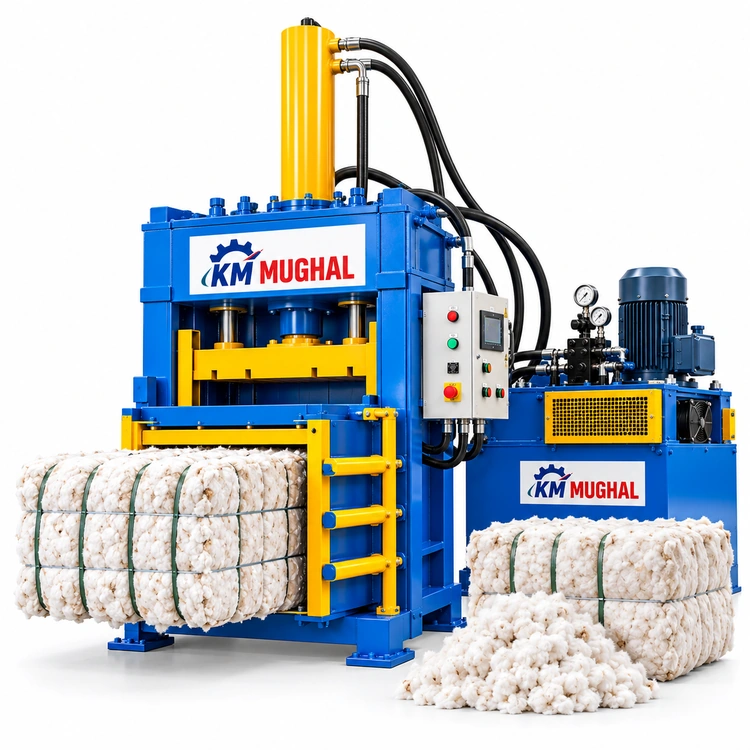
Cotton Baling Machine – Efficient Cotton Compression for Industrial
Applications
The KM Mughal Cotton Baling Machine is designed to compress loose cotton into compact bales, making storage, handling, and transportation more convenient. It uses hydraulic compression to reduce the volume of cotton and prepare it for further processing or transportation.
Cotton is a lightweight material that can occupy considerable storage space when left loose. A cotton baling machine helps address this challenge by compressing cotton into organized bales, supporting better space utilization and more efficient material handling.
Suitable for cotton ginning factories, textile mills, cotton processing facilities, and other industrial operations, the machine provides a practical solution for cotton baling requirements.
Key Features & Benefits
| Key Feature | Benefit |
|---|---|
| Hydraulic Compression System | Compresses loose cotton into compact bales. |
| Efficient Volume Reduction | Helps reduce the space required for cotton storage. |
| Industrial Construction | Designed for cotton processing and industrial applications. |
| Organized Bale Formation | Makes cotton easier to handle, store, and transport. |
| Improved Material Handling | Supports more organized movement of cotton within facilities. |
| Suitable for Cotton Processing | Designed for applications involving raw cotton and suitable cotton fibres. |
| Storage Convenience | Helps businesses manage cotton inventory more efficiently. |
| Transportation Support | Compact bales are easier to handle during transportation. |
Applications of Cotton Baling Machine
The Cotton Baling Machine can be used in different industries and facilities involved in cotton processing and handling.
Common applications include:
-
Cotton ginning factories
-
Textile manufacturing units
-
Cotton processing plants
-
Agricultural processing facilities
-
Cotton storage and warehousing facilities
-
Industrial cotton handling operations
Materials Processed
The machine is intended for processing suitable cotton materials, including:
-
Raw cotton
-
Ginned cotton
-
Loose cotton fibres
-
Other suitable cotton materials, depending on machine configuration
How Does a Cotton Baling Machine Work?
A Cotton Baling Machine uses hydraulic pressure to compress loose cotton into a compact form.
The general process involves:
-
Cotton Loading: Loose cotton is placed into the machine’s compression chamber.
-
Hydraulic Compression: The hydraulic system applies pressure to compress the cotton.
-
Bale Formation: The compressed cotton takes a compact bale shape.
-
Bale Removal: The formed bale is removed for storage, handling, or transportation.
The exact operating process and bale ejection method may vary depending on the machine configuration.
Why Choose KM Mughal Cotton Baling Machine?
KM Mughal provides industrial machinery solutions designed to support practical manufacturing and material-handling requirements. Its Cotton Baling Machine is intended to help businesses compress loose cotton, improve storage organization, and simplify cotton handling.
Whether you operate a cotton ginning factory, textile mill, or cotton processing facility, selecting a suitable cotton baling solution can help improve your material management process.
Contact KM Mughal to discuss your cotton baling requirements and confirm the machine configuration suitable for your operation.
Frequently Asked Questions (FAQs)
1. What is a Cotton Baling Machine?
A Cotton Baling Machine is industrial equipment used to compress loose cotton into compact bales for easier storage, handling, and transportation.
2. How does a Cotton Baling Machine work?
It uses a hydraulic compression system to apply pressure to loose cotton and form compact bales.
3. What materials can a Cotton Baling Machine process?
It is designed for raw cotton, ginned cotton, and other suitable cotton fibres, depending on the machine configuration.
4. What are the main benefits of using a Cotton Baling Machine?
It helps reduce cotton volume, organize storage, simplify handling, and make transportation more convenient.
5. Which industries use Cotton Baling Machines?
Cotton ginning factories, textile mills, cotton processing plants, agricultural facilities, and cotton storage businesses commonly use this equipment.
6. Does a Cotton Baling Machine help reduce storage space?
Yes. By compressing loose cotton into compact bales, it helps businesses use their available storage space more efficiently.
7. Is a Cotton Baling Machine suitable for industrial applications?
Yes. It is intended for cotton processing and handling operations in industrial facilities.
8. What is the capacity of the KM Mughal Cotton Baling Machine?
The exact capacity range has not been provided. Contact KM Mughal to confirm the available machine capacities.
9. How can I choose the right Cotton Baling Machine?
Consider your daily cotton processing volume, material requirements, available space, and desired bale specifications before selecting a machine.
10. Where can I purchase a Cotton Baling Machine in Pakistan?
You can contact KM Mughal through its official website at km-mughal.com to discuss machine availability and purchasing requirements.

Reviews
There are no reviews yet.