
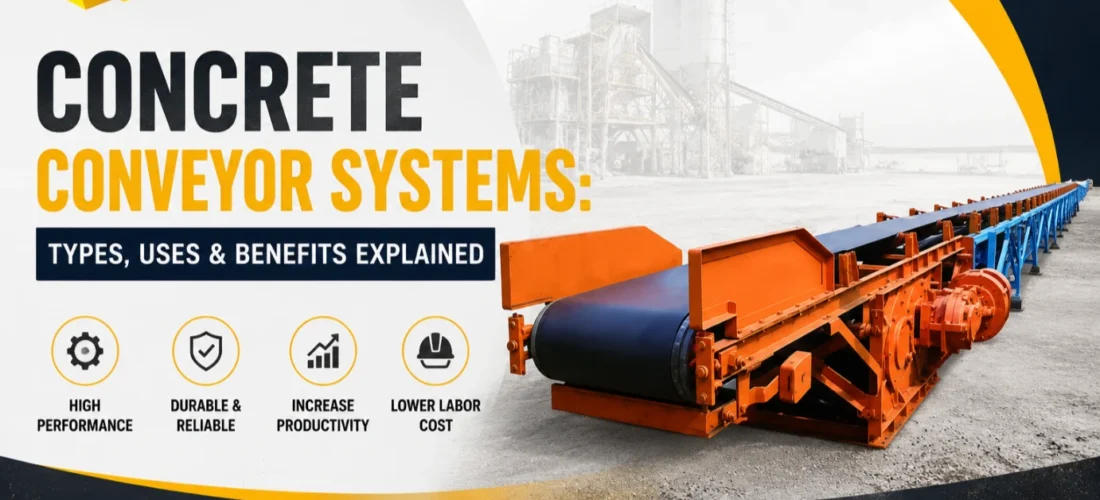
Moving wet concrete across a busy site without losing time, labor, or material is one of the biggest challenges on any construction or batching plant project. This is where concrete conveyor systems come in. These heavy-duty, motor-driven systems transport concrete, cement, sand, and gravel continuously from the mixing point to the placement point, cutting down manual handling and keeping projects on schedule. This guide covers the main types of concrete conveyors, how they work, what they cost, and how to choose the right one for your site.
What Is a Concrete Conveyor System?
A concrete conveyor system is mechanical equipment built to move freshly mixed concrete or bulk construction materials from one point to another without manual carrying. Instead of relying on wheelbarrows or repeated truck trips, a conveyor keeps material flowing continuously, which is especially valuable on large builds, ready-mix plants, and infrastructure projects.
KM Mughal’s Cement Conveyor & Conveying System is built for exactly this — continuous, heavy-duty transport that fits directly into batching plants, block-making lines, and ready-mix setups.
Types of Concrete Conveyor Systems
Not every site needs the same conveyor. The right choice depends on distance, height, material type, and how often the conveyor needs to move.
1. Belt Conveyor for Concrete
The most common option for general site use. A moving belt carries concrete horizontally or at an incline, making it suitable for large construction sites and batching plants that need to move high volumes quickly.
2. Screw Conveyor for Cement
Uses a rotating screw mechanism inside an enclosed tube, giving controlled, dust-free transfer. This makes it the preferred choice for cement and other fine, powdery materials.
3. Bucket Conveyor Construction
Buckets attached to a moving chain lift material vertically, making this the go-to option for high-rise construction where concrete needs to travel upward rather than across.
4. Portable Concrete Conveyor
Lightweight and easy to relocate, portable conveyors are built for temporary setups and mobile construction projects where the conveyor needs to move between pour locations or job sites.
Key Components of a Concrete Conveyor System
Every concrete conveyor, regardless of type, relies on a few core components working together:
- Conveyor belt or screw system – the surface or mechanism that physically moves the material
- Motor and drive unit – powers continuous movement
- Support frame structure – keeps the system stable under load
- Rollers and idlers – guide and support the belt along its path
- Control system – manages speed and automation on advanced models
Benefits of Concrete Conveyor Systems
Switching from manual transport to a conveyor system delivers measurable gains on site:
- Reduces manual labor and the associated safety risk
- Keeps concrete flowing continuously, avoiding cold joints
- Minimizes material loss and wastage during transport
- Speeds up project timelines with faster placement
- Lowers long-term operational cost compared to repeated manual trips
Where Concrete Conveyors for Construction Sites Are Used
Concrete conveyor systems are used wherever consistent, high-volume material placement matters:
- Construction sites and building projects
- Ready-mix concrete plants
- Infrastructure and road projects
- High-rise building construction
- Industrial production facilities
They’re commonly paired with other batching equipment such as concrete mixer machines and aggregate hoppers to keep the full mixing-to-placement process running without interruption.
Concrete Conveyor Price: What Affects the Cost
Concrete conveyor pricing varies based on a handful of factors, so there’s no single flat rate across the market:
- Conveyor type – belt, screw, or bucket
- Length and capacity requirements
- Motor power and level of automation
- Build quality and materials used
- Any custom modifications for the site
Basic conveyors are more budget-friendly, while heavy-duty and automated systems require a higher investment upfront but reduce labor cost over time. The smart approach is to size the conveyor to your project’s material flow needs rather than choosing on price alone.
Choosing a Reliable Concrete Conveyor Manufacturer in Pakistan
Site layout, load capacity, and after-sales support all matter as much as the conveyor itself. As a concrete conveyor manufacturer in Pakistan, KM Mughal builds conveyor systems designed for local site conditions and pairs them with equipment such as ready-mix concrete batching plants for projects that need a complete batching-to-placement setup.
FAQs
What is a concrete conveyor used for?
It’s used to transport wet concrete efficiently across a construction site or batching plant, reducing manual handling.
Which type of conveyor is best for concrete?
Belt conveyors work well for general site use, while screw conveyors are better suited to controlled cement handling.
Can concrete conveyors handle vertical transport?
Yes – bucket conveyors are specifically designed for lifting material vertically on high-rise projects.
How much does a concrete conveyor cost?
Cost depends on the type, length, capacity, and automation level of the system.
Do concrete conveyors need regular maintenance?
Yes – routine maintenance of belts, rollers, and drive components ensures long-term, reliable performance.
Get the Right Concrete Conveyor for Your Site
Choosing between belt, screw, bucket, or portable conveyors comes down to your site’s layout, material, and volume needs. Explore KM Mughal’s Cement Conveyor & Conveying System or get in touch with our team for a setup tailored to your project.
Related Posts

Post a Comment