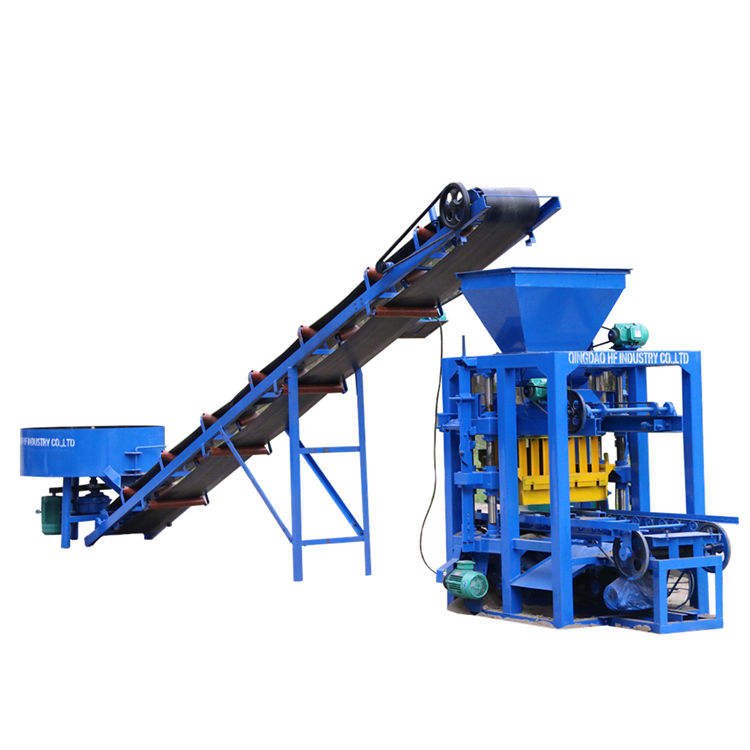
Hydraulic Press Block Making Machine Price in Pakistan
If you are searching for a reliable hydraulic press block making machine in Pakistan that produces strong, dense, and precisely shaped concrete products you are in the right place. KM Mughal manufactures and supplies heavy-duty hydraulic press machines designed for producing interlock blocks, hollow blocks, paver tiles, tuff tiles, and other precast concrete products. Our machines are built for long-term industrial use with competitive pricing for both local and international markets.
What Is a Hydraulic Press Block Making Machine?
A hydraulic press block making machine is an industrial machine that uses hydraulic pressure — generated by a pump and cylinder system to compress concrete raw materials inside a mold. The result is a dense, strong, and dimensionally accurate block or tile. Unlike vibration-only machines, a hydraulic press applies direct mechanical force from above, which significantly improves the compaction quality and product strength.
Simple Meaning: It uses liquid pressure (hydraulic oil) to push a pressing plate downward with great force, forming concrete blocks that are harder, heavier, and more uniform than those made by other methods.
Types of Hydraulic Press Block Making Machines
1. Manual Hydraulic Press Machine
The manual hydraulic press is operated by the worker using hand-operated levers and controls. It has a lower initial cost and is suitable for small production units or workshops where electricity supply may be limited.
- Simple operation, low purchase cost
- Suitable for small workshops and low-volume production
- Produces solid blocks, interlock bricks, and paver tiles with mold changes
- Best for: small contractors and startup block businesses
2. Semi-Automatic Hydraulic Press Machine
The semi-automatic model combines manual material feeding with automated hydraulic pressing. It requires less labor than a fully manual machine and delivers faster output with more consistent product quality.
- Automatic hydraulic pressing with manual material loading
- Higher output than manual, lower cost than fully automatic
- Suitable for growing block production businesses
- Best for: medium-scale construction block factories
3. Fully Automatic Hydraulic Press Machine
The fully automatic hydraulic press uses a PLC (Programmable Logic Controller) system to automate the entire process from material feeding to pressing, demolding, and product delivery. It is the most efficient option for large-scale production.
- Complete automation with PLC control panel
- High-speed production with minimal labor requirement
- Consistent quality across thousands of blocks per day
- Best for: large block factories, housing scheme projects, and industrial plants
4. Heavy-Duty Industrial Hydraulic Press
Designed for continuous, heavy-duty operation, these machines feature larger hydraulic cylinders, higher pressure capacity, and reinforced steel frames. They are used in precast concrete industries and large-scale tile manufacturing.
- High-tonnage hydraulic system for maximum compression
- Designed for 24-hour continuous production cycles
- Produces the densest and strongest concrete products
- Best for: precast manufacturers and industrial construction material plants
How Does a Hydraulic Press Block Machine Work?
Understanding the working process helps you operate the machine efficiently and maintain consistent product quality:
- Concrete raw materials (cement, sand, aggregate, water) are mixed in the correct ratio and loaded into the machine’s mold box.
- The hydraulic pump activates, sending pressurized oil to the hydraulic cylinder.
- The cylinder pushes the pressing head downward with high force, compressing the concrete inside the mold.
- Vibration (in combined models) helps settle the material evenly before final pressing.
- After the set pressing time, the mold opens and the finished block is ejected onto a pallet or the ground.
- The block is moved to a curing area where it gains strength over 24–48 hours.
This controlled process ensures each block is identical in size, density, and compressive strength.
Key Features of KM Mughal Hydraulic Press Machines
- High-pressure hydraulic cylinder for superior concrete compaction
- Heavy-duty welded steel frame for long machine life
- Interchangeable mold system for different block shapes and sizes
- PLC control system available in automatic models
- Energy-efficient hydraulic pump motor unit
- Low maintenance design with easy access to hydraulic components
- Produces interlock blocks, hollow blocks, solid blocks, tuff tiles, and paver blocks
- Suitable for cement, fly ash, and aggregate-based concrete mixes
Products You Can Make with a Hydraulic Press Machine
One machine, multiple products simply change the mold set:
| Product Type | Common Uses |
| Interlock Hollow Blocks | Boundary walls, retaining walls, housing construction |
| Solid Concrete Blocks | Load-bearing walls, foundations, structural work |
| Paver Blocks | Driveways, footpaths, parking areas, public spaces |
| Tuff Tiles | Residential and commercial flooring, outdoor areas |
| Fly Ash Bricks | Eco-friendly and lightweight construction bricks |
| Kerb Stones | Road edges, drainage channels, landscaping |
| Precast Wall Panels | Fast construction of industrial and commercial buildings |
Main Components of a Hydraulic Press Block Machine
| Component | Function |
| Hydraulic Cylinder | Generates the pressing force by converting oil pressure into mechanical force |
| Hydraulic Pump & Motor | Powers the hydraulic system by pumping oil at controlled pressure |
| Oil Tank (Reservoir) | Stores the hydraulic oil used in the system; maintains fluid levels |
| Pressing Head / Plate | The part that pushes directly onto the concrete mix inside the mold |
| Mold Box | Gives the concrete its shape; interchangeable for different block types |
| PLC Control Panel | Automates the entire cycle in semi-auto and fully automatic models |
| Steel Frame Structure | Supports all components; must be heavy-duty to absorb pressing force |
| Vibration Unit (optional) | Some models include vibration to improve concrete distribution in the mold |
Where Is a Hydraulic Press Machine Used?
Hydraulic press block making machines are widely used across multiple industries in Pakistan and internationally:
- Concrete block manufacturing factories and production plants
- Housing societies and residential construction projects
- Road and infrastructure development (paver and kerb stone production)
- Government and private precast concrete industries
- Tuff tile and interlocking paver production businesses
- Boundary wall construction and commercial building projects
- Export-grade block and tile manufacturing for international markets
Hydraulic Press Machine vs Vibration Block Machine | Which Is Better?
| Feature | Hydraulic Press Machine |
| Compaction Method | Direct hydraulic pressure — produces higher-density blocks |
| Block Strength | Higher compressive strength due to direct pressing force |
| Product Consistency | Very uniform size and density across all blocks |
| Best For | Interlock blocks, dense tiles, high-strength pavers |
| Automation | Available from manual to fully automatic |
| Maintenance | Requires hydraulic oil and cylinder maintenance |
| Investment | Moderate to high — but delivers premium product quality |
Note: For large-volume hollow block production at lower density, vibration machines may be more suitable. For high-strength interlock and paver products, hydraulic press machines deliver superior results.
Hydraulic Press Block Machine Price in Pakistan
The price of a hydraulic press block making machine in Pakistan depends on several key factors:
- Automation level: manual is the most affordable; fully automatic PLC-controlled models require higher investment
- Pressure capacity: higher tonnage machines produce denser, stronger products but cost more
- Machine size and frame structure: heavy-duty models with larger frames are priced higher
- Mold type and variety: custom or multi-product mold sets affect the total price
- Hydraulic system quality: branded hydraulic components (pumps, cylinders, valves) add to cost but extend machine life
At KM Mughal, we offer competitive pricing on all hydraulic press machine models — from small manual presses to large fully automatic systems. Contact us via WhatsApp or call to get a custom quote based on your production requirements.
How to Choose the Right Hydraulic Press Machine?
Use this simple guide to find the best machine for your business:
| Your Situation | Recommended Machine |
| Small workshop, limited budget | Manual hydraulic press — low cost, simple operation |
| Growing business, medium production | Semi-automatic hydraulic press — balance of cost and output |
| Large block factory, high daily output | Fully automatic PLC hydraulic press — maximum efficiency |
| Precast or tile manufacturing plant | Heavy-duty industrial hydraulic press — highest pressure capacity |
| Limited electricity, rural location | Diesel-powered or manual hydraulic press options |
| Multiple product types needed | Any model with interchangeable mold system |
Why Choose KM Mughal for Hydraulic Press Machines?
- Trusted Pakistani manufacturer with years of experience in construction machinery
- High-quality steel frame construction for maximum durability in tough site conditions
- Wide product range: manual, semi-auto, and fully automatic hydraulic press machines
- Interchangeable mold solutions for multiple block and tile types
- Competitive pricing with transparent quotes — no hidden costs
- After-sales technical support and spare parts availability
- Serving construction businesses across Pakistan and international markets
- Purchase conveniently via WhatsApp with fast response and delivery
Frequently Asked Questions (FAQs)
Q1: What is a hydraulic press block making machine?
A hydraulic press block making machine uses hydraulic pressure to compress concrete materials inside a mold, producing strong and dense blocks, tiles, or pavers. The hydraulic system delivers consistent force, resulting in high-quality products every cycle.
Q2: What types of blocks can a hydraulic press machine produce?
It can produce interlock blocks, hollow blocks, solid blocks, paver tiles, tuff tiles, kerb stones, and fly ash bricks — depending on the mold set installed. Changing the mold allows you to switch between product types.
Q3: Is a hydraulic press better than a vibration block machine?
For high-density, high-strength products like interlock blocks and paver tiles, hydraulic press machines produce superior results because of the direct compaction force. Vibration machines are better suited for high-volume hollow block production at lower density requirements.
Q4: How much does a hydraulic press machine cost in Pakistan?
Price depends on the machine model, automation level, pressure capacity, and mold type. Manual models are the most budget-friendly entry point, while fully automatic PLC-controlled systems represent a larger investment with significantly better productivity and long-term ROI. Contact KM Mughal for a current price quote.
Q5: Can I change the mold to make different products?
Yes. KM Mughal hydraulic press machines come with an interchangeable mold system. You can switch between interlock blocks, paver blocks, tuff tiles, kerb stones, and more by simply changing the mold set — no major machine modification required.
Q6: Is it suitable for large-scale production in Pakistan?
Absolutely. The fully automatic and heavy-duty hydraulic press models from KM Mughal are designed for continuous, large-scale production in block factories, housing scheme projects, and industrial precast plants across Pakistan.
Q7: What maintenance does a hydraulic press machine require?
Regular maintenance includes checking hydraulic oil levels, inspecting seals and cylinder connections for leaks, cleaning the mold after each production run, and lubricating moving parts. KM Mughal provides after-sales technical support to help keep your machine running at peak performance.
Reviews
There are no reviews yet.